
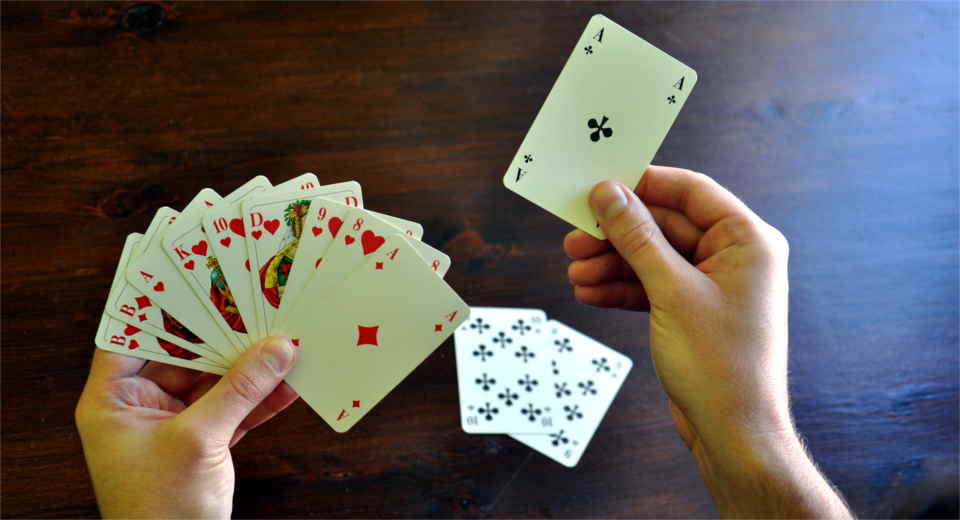
Card games have entertained people for centuries, blending skill, chance and social interaction. From ancient traditions to today’s digital formats, they remain one of the most versatile pastimes. Whether enjoyed casually with family or played competitively, a card game offers mental stimulation, cultural connection and even strategic training. In this article, we will explore their origins, varieties, strategies, cultural role and modern appeal.
The Origins of Card Games
Card games are believed to have originated in China during the Tang dynasty around the 9th century. Early cards were more symbolic than playful, often linked with currency or storytelling. As trade routes expanded, playing cards travelled through Persia and India, eventually reaching Europe in the 14th century. By the Renaissance, cards were not only a form of entertainment but also a marker of art and social identity, featuring elaborate designs that reflected regional cultures.
The Structure of a Standard Deck
Most traditional card games use a 52-card deck. This structure has remained remarkably consistent, with four suits (hearts, clubs, diamonds and spades) and 13 ranks per suit. Some variations include jokers, which add wild-card flexibility. The simplicity of this system is what makes card games endlessly adaptable. By reshuffling, the same deck can support hundreds of unique games.
Categories of Card Games
Card games can be broadly divided into several categories, each with distinct gameplay mechanics and objectives.
Trick-Taking Games
These include classics such as Bridge, Spades and Hearts. Players aim to win “tricks” by playing the highest card in a round. Strategy, memory and prediction are key elements.
Matching Games
Games like Rummy and Go Fish focus on collecting sets or sequences of cards. These are often family favourites due to their straightforward mechanics.
Casino-Style Games
Blackjack and Poker fall into this group. Here, probability, psychology and risk assessment take centre stage, making them popular in both casual and professional contexts.
Solitaire Variants
Played alone, Solitaire games rely heavily on logical sequencing and patience. The digital age has amplified their popularity, making them one of the most-played formats worldwide.
Collectible Card Games
In modern times, collectible card games (CCGs) such as those involving themed decks have emerged. They combine strategy with personalised deck-building, creating a hybrid of traditional gameplay and hobby culture.
The Psychological Benefits of Playing Card Games
Card games are not only entertaining but also mentally stimulating. Regular play sharpens memory, improves problem-solving skills and fosters patience. The requirement to anticipate opponents’ moves builds logical reasoning, while managing uncertainty enhances decision-making under pressure. For children, card games can develop numeracy and pattern recognition, while for older adults they provide cognitive engagement that supports brain health.
Social and Cultural Importance
Throughout history, card games have served as a bridge between cultures and generations. In medieval Europe, they were a pastime for both nobility and commoners. In modern households, they are a favourite during holidays and gatherings. Card games encourage conversation, laughter and bonding, making them a universal social tool. In competitive settings, they form communities, clubs and even professional circuits where players connect through shared passion.
Strategies for Success in Card Games
Though luck plays a role, skill often determines long-term success. Effective strategies include:
-
Observation: Paying attention to cards played helps predict what remains in circulation.
-
Memory Training: Recalling which cards have been discarded can influence smarter decisions.
-
Probability Awareness: Estimating odds adds precision to gameplay, especially in casino-style games.
-
Bluffing and Psychology: In games like Poker, reading opponents and disguising intentions are as crucial as the cards themselves.
-
Adaptability: Each hand offers a new situation, and the ability to adjust strategy is vital.
Modern Adaptations and Digital Platforms
With the rise of technology, card games have evolved into mobile apps, online platforms and e-sports competitions. Digital card games allow players to compete globally, often incorporating animations, rewards and advanced deck-building mechanics. Yet the core appeal remains the same: testing wit, strategy and chance.
Educational and Professional Uses
Card games are now recognised for their educational applications. Teachers use them to teach probability, logic and even language skills. In professional environments, they are applied in team-building exercises, as they encourage communication, patience and tactical planning. Some card game mechanics have even influenced business simulations and negotiation training.
The Enduring Appeal of Card Games
Why have card games lasted for centuries while other trends fade? The answer lies in their flexibility. A single deck can adapt to countless games, rules can be modified for any age group, and formats can shift between leisure, learning and competition. They require minimal equipment, making them accessible anywhere in the world. Most importantly, they connect people in meaningful ways.
Frequently Asked Questions
What is the easiest card game to learn for beginners?
Go Fish and Crazy Eights are often recommended because they have simple rules, short playtimes and encourage social interaction. They are suitable for children and adults alike.
How can playing a card game improve life skills?
They foster patience, problem-solving, decision-making and interpersonal skills. For children, they can strengthen mathematical understanding, while for adults, they improve strategic thinking and memory.
Are digital card games as beneficial as physical ones?
Yes, digital formats provide the same cognitive benefits, though they may lack the tactile and social presence of in-person play. However, they expand access by connecting players worldwide.
Can card games be played for educational purposes?
Absolutely. Teachers often use card games to demonstrate probability, sequencing, patterns and even history. They are interactive tools that keep students engaged.
What are some good two-player card games?
Rummy, Spades (adapted for two players) and Gin Rummy are excellent choices. They balance simplicity with strategy, making them engaging for small gatherings.
Why do people still prefer traditional card games when so many digital options exist?
Traditional card games create a personal atmosphere where players can read expressions, laugh together and enjoy the physicality of handling cards. This human connection makes them timeless despite modern alternatives.
